
Control Groundwater Before It Reaches Your Foundation
Subsurface drain tile installation in Moultrie that manages moisture buildup and protects structural integrity.
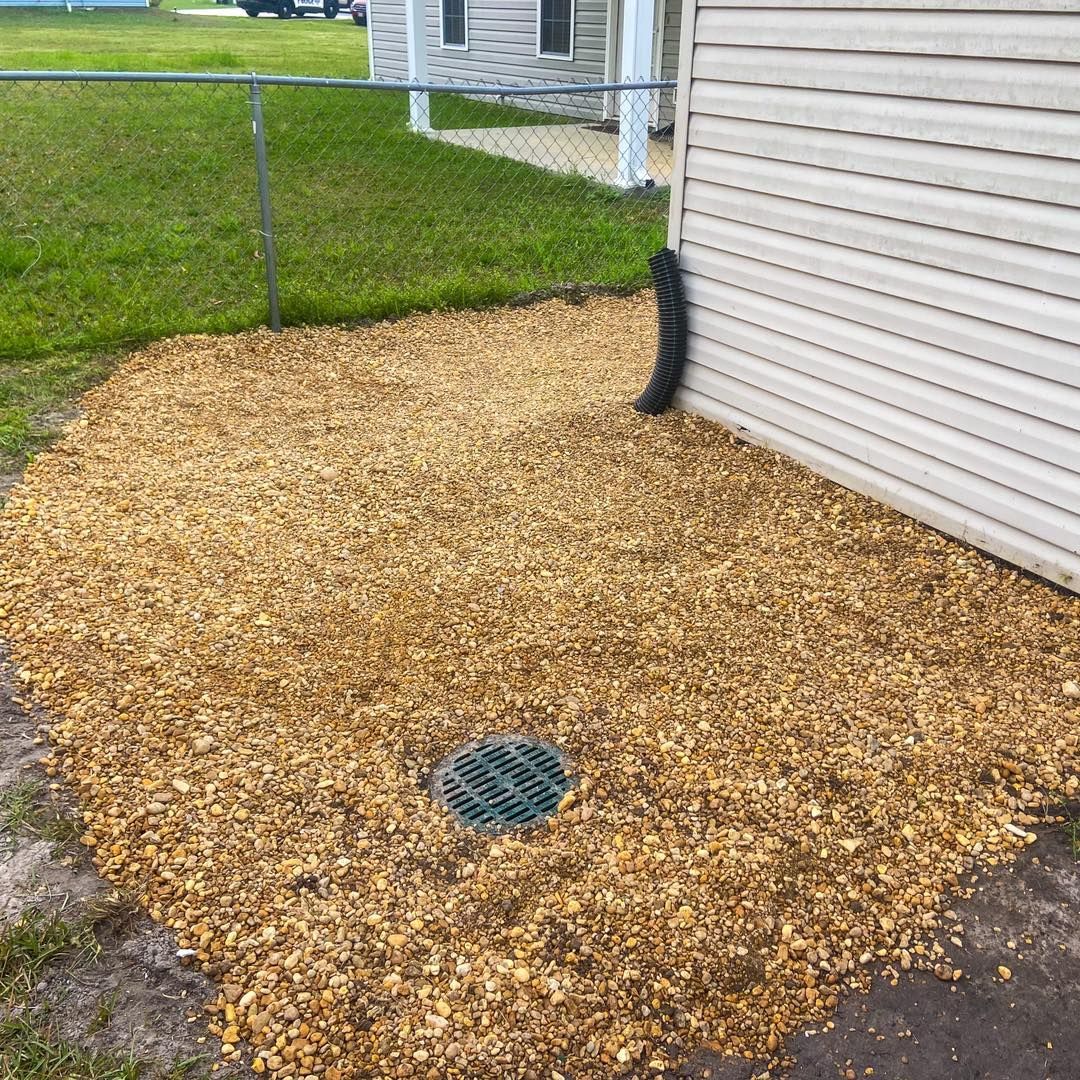
When groundwater saturates the soil around your foundation, it creates hydrostatic pressure that can lead to cracking, seepage, and long-term structural movement. Properties in Moultrie with high water tables or poorly draining clay soils are especially vulnerable during wet seasons. Environmental Construction Services installs drain tile systems that intercept groundwater before it reaches your foundation walls and route it safely away from the structure.
Drain tile is a perforated pipe installed in a gravel-filled trench around the perimeter of a foundation or beneath saturated yard areas. The pipe collects subsurface water and channels it to a discharge point or sump system. This type of installation requires accurate trench depth, proper slope, and careful backfill to maintain long-term function. The system works passively and does not require power or ongoing intervention once installed.
Environmental Construction Services provides site evaluation and consultation before drain tile installation begins in Moultrie.
How the System Functions After Installation
Once the drain tile is installed and the trench is backfilled, groundwater that used to press against your foundation is intercepted by the perforated pipe and carried away through gravity flow. You will notice that basement walls or crawl spaces that previously showed moisture staining begin to dry out, and the musty smell that often accompanies prolonged dampness starts to fade. Environmental Construction Services uses proper grading and trenching techniques to ensure the system drains correctly from the start.
The system is designed to handle fluctuating water tables and seasonal saturation without clogging or losing capacity. It helps preserve structural integrity and landscaping investments by reducing the risk of foundation settlement and soil erosion around the home. After installation, the disturbed areas are graded and restored to match the surrounding landscape.
Drain tile does not prevent all moisture from reaching the foundation during extreme weather, but it significantly reduces buildup and the associated risks. The system is suitable for new construction and existing property retrofits, and it functions without routine maintenance beyond occasional outlet inspection.
Common Questions About Drain Tile Systems
Homeowners in Moultrie often ask how deep the system needs to be, where the water goes, and whether it will affect their yard or landscaping during installation.
What depth is required for drain tile installation?
Depth varies based on foundation type and water table level, but most systems are installed between two and four feet below grade. The trench must be deep enough to intercept groundwater before it reaches the foundation.
How does the water exit the system?
The drain tile connects to a discharge line that routes water to a lower area of the property, a drainage easement, or a dry well depending on site conditions and local codes.
What happens to the yard after installation?
Trenches are backfilled with gravel and soil, then graded and restored with seed or sod. The surface may settle slightly over the first few months as soil compacts, but this is typical and easily corrected.
When is drain tile necessary instead of surface drainage?
Drain tile is used when the problem is subsurface moisture or groundwater rather than surface runoff. If your foundation shows moisture intrusion or your yard stays saturated even without visible pooling, drain tile is the appropriate solution.
Why is gravel used around the pipe?
Gravel allows water to flow freely into the perforations while preventing soil from clogging the pipe. It also helps maintain the trench structure and supports proper drainage over time.
Environmental Construction Services installs drain tile systems for residential and light commercial properties in Moultrie using equipment and techniques that prioritize accurate elevation and long-term performance. Site restoration is completed carefully after installation.